 By admin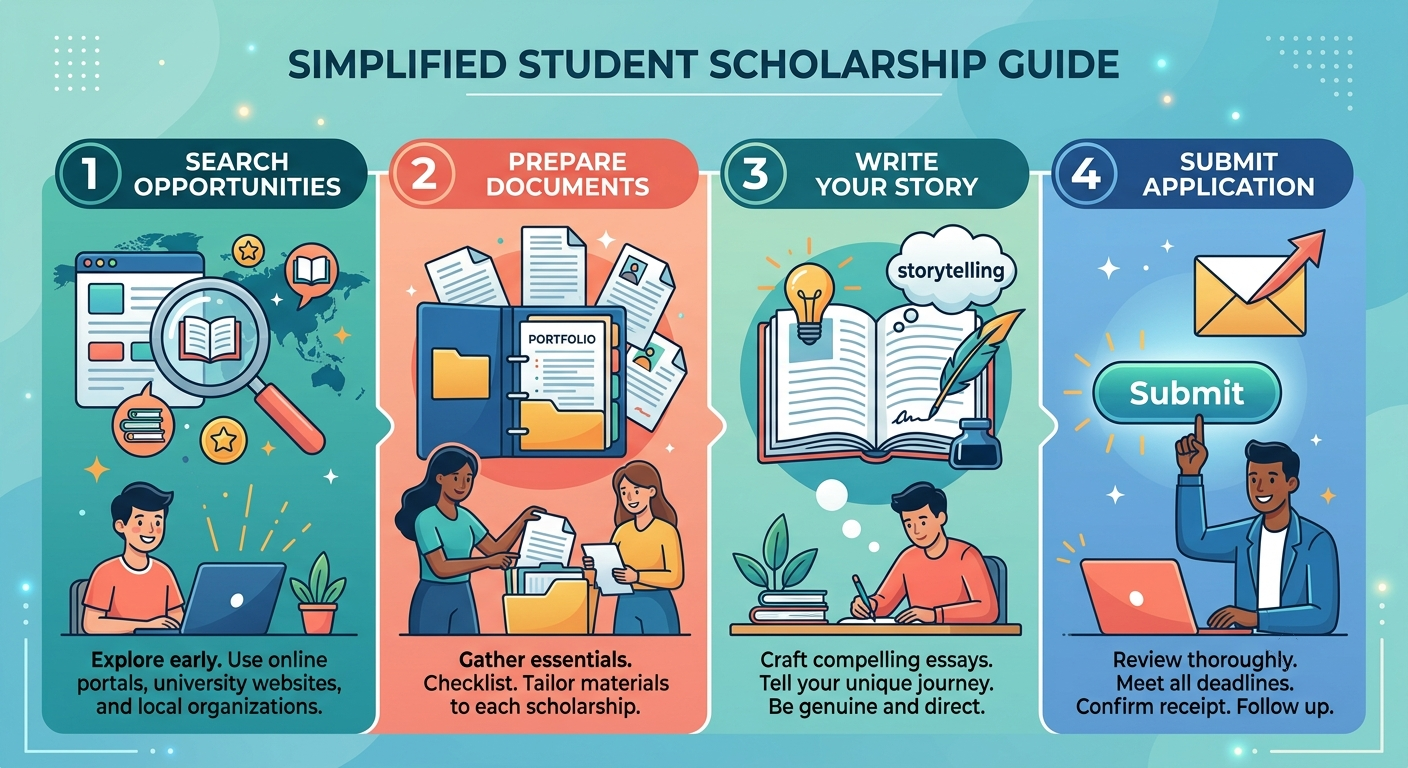
Education is the single most powerful tool for personal advancement and social mobility. However, rising tuition fees, living expenses, and administrative costs often create significant financial barriers for talented students worldwide. Scholarships serve as a vital mechanism to bridge this financial gap, ensuring that financial constraints do not hinder academic excellence or career potential.
1. Understanding Scholarships
A scholarship is a form of non-repayable financial aid awarded to students to assist in funding their education. Unlike student loans, scholarships do not require repayment. They are funded by various organizations, including government ministries, non-governmental organizations (NGOs), corporate foundations, educational institutions, and philanthropic trusts.
Key Differences: Scholarship vs. Student Loan vs. Educational Grant
| Feature | Scholarship | Student Loan | Educational Grant |
| Repayment Requirement | None (Non-repayable) | Mandatory (Must be repaid with interest) | None (Non-repayable) |
| Primary Basis for Award | Academic Merit, Financial Need, or Talent | Creditworthiness, Income, or Collateral | Need-based or Research Project Specific |
| Primary Source | Governments, Trusts, Corporates, Universities | Banks, Non-Banking Financial Companies (NBFCs) | Government Agencies, Research Bodies |
| Financial Impact | Reduces overall education cost | Creates future financial liability | Covers specific tuition or research expenses |
2. Primary Categories of Scholarships
Scholarships are classified based on their eligibility conditions, target demographic, and funding objectives.
                          ┌──────────────────────────┐
                          │   Scholarship Categories │
                          └────────────┬─────────────┘
                                       │
        ┌───────────────┬──────────────┼──────────────┬──────────────┐
        ▼               ▼              ▼              ▼              ▼
┌──────────────┐ ┌──────────────┐ ┌──────────────┐ ┌──────────────┐ ┌──────────────┐
│ Merit-Based  │ │ Need-Based   │ │ Category     │ │ Talent/Sports│ │ International│
│ (Academic)   │ │ (Financial)  │ │ (Reserved)   │ │ (Co-Curricular)│ (Study Abroad)│
└──────────────┘ └──────────────┘ └──────────────┘ └──────────────┘ └──────────────┘
Merit-Based Scholarships
Merit-based scholarships are awarded to students who demonstrate exceptional academic performance, standardized test scores, or specific intellectual achievements. The primary objective is to reward dedication and encourage intellectual growth regardless of the applicant’s financial background.
Need-Based (Means-Based) Scholarships
Need-based scholarships evaluate the financial capacity of a student’s family. These awards prioritize candidates from low-income households, ensuring that economic hardship does not prevent capable students from attending school or university.
Merit-cum-Means Scholarships
Merit-cum-means scholarships combine academic criteria with financial evaluation. Applicants must maintain a specified academic average (e.g., above 60–70%) while demonstrating that their aggregate family annual income falls below a predefined threshold.
Category-Based / Social Equity Scholarships
Government bodies offer category-based scholarships to support historically underrepresented or socially marginalized communities (such as SC, ST, OBC, EBC, DNT, and minority demographics). These programs aim to promote educational access and social equity.
Gender-Specific Scholarships (Women in STEM)
To correct gender imbalances in technical and professional fields, numerous government initiatives and private corporations offer exclusive scholarships for female students pursuing degrees in Science, Technology, Engineering, and Mathematics (STEM).
Sports and Talent-Based Scholarships
These scholarships support individuals who demonstrate exceptional performance in national or international sports events, arts, music, or co-curricular competitions. Sports ministries, athletic boards, and private sports academies offer these awards.
International Study Abroad Grants
Designed for students seeking degrees outside their home countries, these competitive grants cover international tuition, airfare, health insurance, and monthly living stipends (e.g., Chevening, Fulbright, DAAD, and Commonwealth Scholarships).
3. Major Government and Private Scholarship Initiatives
Central Government Schemes (National Scholarship Portal – NSP)
- PM-USP Central Sector Scheme of Scholarship for College and University Students:Supports high-performing students who rank within the top 20th percentile of their respective Secondary Education Boards and whose family annual income is below specified income limits.
- AICTE Pragati Scholarship Scheme for Girl Students:Provides a financial grant of ₹50,000 per annum to female students enrolled in AICTE-approved technical diploma or degree programs.
- AICTE Saksham Scholarship Scheme:Provides dedicated financial support of ₹50,000 per year to specially-abled students (with a disability level of 40% or higher) pursuing technical education.
- PM-YASASVI Scheme:Focuses on providing top-class education and post-matric financial support to OBC, EBC, and DNT students studying in notified schools and higher education institutes.
- National Means-cum-Merit Scholarship Scheme (NMMSS):Targeted at Grade 8 students to reduce dropout rates in secondary school, providing an annual grant of ₹12,000 through Grade 12.
Prominent Corporate & Private Foundation Programs
- Reliance Foundation Scholarships: Offers merit-cum-means grants for undergraduate and postgraduate students across diverse disciplines.
- Aditya Birla Group Scholarships: Fully funds educational costs for scholars attending premier institutions like IITs, IIMs, XLRI, and top law universities.
- Tata Capital Pankh Scholarship: Offers financial assistance to school and college students from economically vulnerable backgrounds.
- Aazim Premji Foundation Grants: Focuses on supporting underprivileged female students pursuing professional degree courses.
4. Universal Eligibility Criteria Framework
Although every scholarship scheme enforces its own guidelines, candidates must generally meet a core set of eligibility parameters:
- Academic Performance Benchmark: A minimum percentage in the qualifying examination (ranging from 50% to 80% depending on the competitive nature of the grant).
- Family Annual Income Limit: Need-based schemes enforce annual family income caps, usually ranging between ₹1.5 Lakhs and ₹8.0 Lakhs per annum. Income verification requires an official certificate issued by a designated revenue authority.
- Domicile & Residency Mandate: State-level scholarships require candidates to hold a valid Permanent Resident / Domicile Certificate for that state.
- Institutional Recognition: Applicants must be enrolled in a regular, full-time course at an accredited school, college, or university recognized by statutory bodies (such as UGC, AICTE, or State Boards).
5. Essential Document Checklist
To ensure smooth processing, organize and verify the required documentation before starting an application:
Document Verification Checklist:
- [ ] Government Issued Identity: Aadhaar Card (Must be active and linked to your primary mobile number).
- [ ] Academic Records: Official marksheets and certificates from Grade 10 onwards.
- [ ] Income Certificate: Valid, current-year Income Certificate issued by an authorized revenue officer (Tahsildar/SDM).
- [ ] Category / Caste Certificate: Official Caste/Community Certificate for SC/ST/OBC/EBC applicants.
- [ ] Domicile Certificate: State residence proof issued by competent state authorities.
- [ ] Bank Account Details: Passbook copy of an active, single-operated account linked to Aadhaar (NPCI seeded).
- [ ] Proof of Admission: Current academic year admission letter, Bonafide Student Certificate, and official fee receipt.
- [ ] Passport Photographs: Recent color photographs meeting portal size specifications.
6. Step-by-Step Application Workflow
Scholarship applications are managed through centralized, transparent digital portals.
┌─────────────────────────────────────────────────────────┐
│ Step 1: Portal Registration & One-Time Registration     │
└───────────────────────────┬─────────────────────────────┘
                            │
                            ▼
┌─────────────────────────────────────────────────────────┐
│ Step 2: Scheme Selection & Application Form Filling    │
└───────────────────────────┬─────────────────────────────┘
                            │
                            ▼
┌─────────────────────────────────────────────────────────┐
│ Step 3: Document Upload & Biometric / OTP Verification  │
└───────────────────────────┬─────────────────────────────┘
                            │
                            ▼
┌─────────────────────────────────────────────────────────┐
│ Step 4: Verification by Institute & District Officers   │
└───────────────────────────┬─────────────────────────────┘
                            │
                            ▼
┌─────────────────────────────────────────────────────────┐
│ Step 5: Direct Benefit Transfer (DBT) to Bank Account   │
└───────────────────────────┘
Step 1: Account Creation & One-Time Registration (OTR)
Visit the designated official portal (e.g., National Scholarship Portal or State Portal) and generate a One-Time Registration (OTR) using your mobile number and Aadhaar details.
Step 2: Scheme Selection & Profile Completion
Log in using your OTR credentials. Fill in your personal information, address, family income, academic credentials, and current course details. Select the scholarship scheme that aligns with your qualifications.
Step 3: Document Upload & Verification
Scan and upload all required supporting documents in the specified file formats (PDF/JPEG) within the mandated size limits. Complete any required OTP or biometric verification steps.
Step 4: Multi-Level Administrative Verification
After online submission, notify your institution’s Nodal Officer for Scholarship Verification. The application undergoes three levels of scrutiny:
- Institutional Level Verification (School/College Nodal Officer)
- District Level Verification (District Welfare Officer)
- State / Board Level Approval
Step 5: Disbursal via Direct Benefit Transfer (DBT)
Once approved by the competent sanctioning authority, funds are transferred directly into your Aadhaar-seeded bank account via Public Financial Management System (PFMS) protocols.
7. Critical Pitfalls and Common Application Errors
- Unseeded Bank Accounts (NPCI Mapping Failure): Having an Aadhaar-linked bank account is not sufficient. The bank account must be actively mapped to the NPCI (National Payments Corporation of India) mapper. Without NPCI seeding, automated Direct Benefit Transfer payments will bounce.
- Data Discrepancies Across Documents: Spelling differences in your name, father’s name, or date of birth between your Aadhaar Card, Grade 10 Marksheet, and Bank Passbook will trigger automated portal rejection. Ensure all identity records match precisely.
- Applying for Multiple Merit Schemes Simultaneously: Most government guidelines restrict students to receiving only one merit-based scholarship per academic year. Applying for multiple government merit grants can lead to the disqualification of all submitted applications.
- Missing Submission Deadlines: Portal traffic peaks significantly during the final week before deadlines, often causing server downtime. Complete submissions, document uploads, and institutional verification requests well in advance.
Frequently Asked Questions (FAQs)
Q1: Are students attending private universities eligible for government scholarships?
Yes. As long as the private university is duly recognized by statutory regulatory bodies (such as UGC, AICTE, or NAAC) and the candidate meets the income and academic parameters of the scheme, private university students are fully eligible.
Q2: What is an Aadhaar-Seeded Bank Account, and why is it mandatory?
Aadhaar seeding links a customer’s bank account directly to the NPCI central payment gateway using their 12-digit Aadhaar number. It is mandatory for government scholarships because all disbursements are processed via Direct Benefit Transfer (DBT) to eliminate intermediaries and prevent fraudulent claims.
Q3: What action should I take if my application status changes to “Defective”?
If an institutional or district officer flags an error in your application (e.g., unclear document upload, incorrect fee receipt), the application status changes to “Defective.” Log into the portal, correct the indicated discrepancy, re-upload the valid document, and re-submit the application before the designated defect-correction deadline.
Q4: How does the scholarship renewal process work for multi-year degree courses?
To renew a scholarship for subsequent academic years, candidates do not need to generate a new registration. Log in using your existing Application ID, submit proof of passing the previous academic year’s examination, upload the current year’s fee receipt, and obtain verification from your institute.