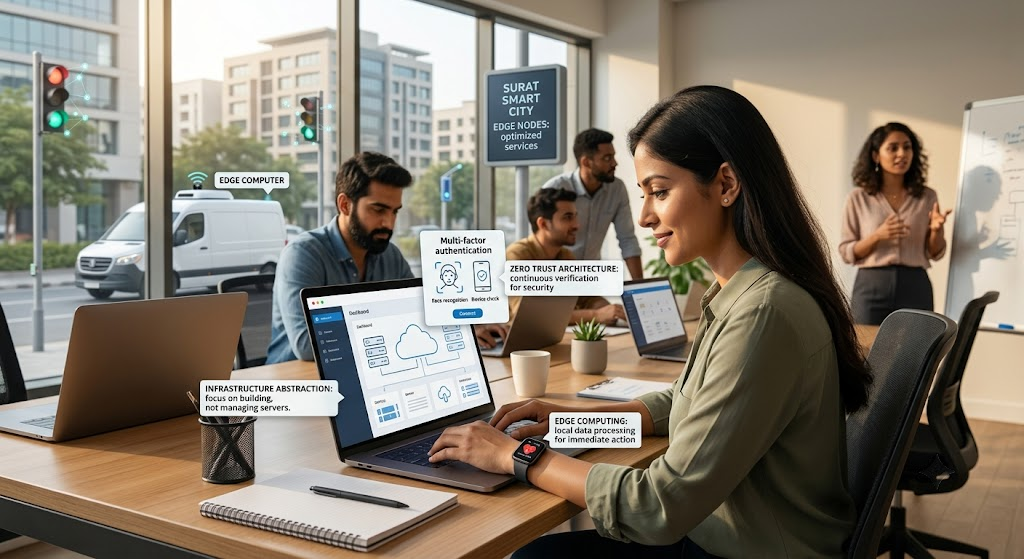
Technical systems engineering forms the foundational bedrock supporting modern computing applications, telecommunication networks, and enterprise IT operations. As global data volumes grow exponentially and sub-millisecond real-time processing becomes standard across industrial automation, financial networks, and connected devices, engineering high-performance hardware, resilient networking, and comprehensive security infrastructure is paramount.
1. Infrastructure Engineering: Bare-Metal, Virtualization, and Cloud Systems
The physical and virtual abstractions governing modern compute environments determine processing latency, resource utilization, and administrative flexibility.
Bare-Metal Compute Systems
Bare-metal environments provide applications with direct hardware access without virtualization overhead. These physical deployments are engineered for high-performance computing tasks, low-latency financial execution engines, and massive database applications where hypervisor resource contention creates noticeable performance degradation.
Virtualization and Hypervisor Architecture
Virtualization abstracts software applications from underlying hardware using hypervisor layers. Hypervisors partition physical processor cores, system memory, and storage pools into isolated Virtual Machines. This capability allows organizations to run diverse operating systems concurrently on shared hardware, improving server utilization across enterprise data centers.
Distributed Cloud Computing Systems
Modern cloud architectures rely on geographically distributed data center nodes configured for high availability and fault isolation. Distributed systems leverage auto-balancing network gateways, distributed consensus protocols, and dynamic storage replication across distinct Availability Zones to maintain continuous operation during hardware failures.
2. Edge Computing and Real-Time IoT Systems
Centralized cloud processing creates latency bottlenecks when analyzing large volumes of telemetry generated by geographically dispersed edge devices such as autonomous vehicles, smart grid sensors, and medical monitoring equipment.
Central Cloud Data Centers
       ▲
       │ High-Bandwidth / Latency Sensitive
       ▼
Regional Edge Aggregation Nodes
       ▲
       │ Micro-Second Telemetry
       ▼
Local IoT Devices & Sensors
Edge computing shifts data processing, storage, and analytics physically closer to the source of data creation. By processing data locally on edge gateway appliances or micro-servers, systems achieve extremely low processing response times, reduce high-bandwidth network transport costs, and sustain core operations during internet connectivity disruptions.
3. Cybersecurity Engineering and Zero Trust Architectures
As enterprise network perimeters expand across multi-cloud environments, remote workforces, and mobile endpoints, traditional perimeter-based security models (“castle-and-moat”) are no longer sufficient to mitigate advanced threat vectors.
Core Principles of Zero Trust Architecture
- Continuous Explicit Verification: Every user, device, and software process attempting to access system resources must be authenticated, authorized, and validated continuously using identity controls, device posture checks, and contextual access rules regardless of network location.
- Least Privilege Access Limits: Users and automated service accounts are granted the absolute minimum access permissions necessary to perform specific tasks, restricting potential lateral movement across internal systems during security incidents.
- Assume Breach Strategy: System security designs assume that external perimeters are continuously vulnerable. Implementation requires strict micro-segmentation across network layers, mandatory end-to-end data encryption for information in transit and at rest, and automated continuous threat analysis.
4. Telemetry, Observability, and Fault Tolerance
Engineering high-availability systems requires continuous monitoring of internal system states through telemetry metrics, structured diagnostic logs, and distributed trace routing.
Site Reliability Engineering (SRE) Concepts
Site Reliability Engineering applies software automation principles to infrastructure operations. SRE teams define Service Level Indicators to track performance metrics like request latency or system uptime, establish Service Level Objectives defining acceptable target performance thresholds, and manage Error Budgets that dictate acceptable deployment risks against system stability needs.
Fault Isolation and System Resilience
To mitigate cascading system failures, technical architectures implement automated circuit breaker patterns, request rate limiting, graceful degradation paths, and health-check mechanisms that automatically isolate malfunctioning nodes without disrupting overall service availability.
5. Frequently Asked Questions
- What is the difference between latency and throughput in technical networking?Latency measures the time delay required for a single data packet to travel from a source endpoint to its destination, typically expressed in milliseconds. Throughput measures the total volume of data successfully transmitted across a network connection within a specified time window, expressed in megabits or gigabits per second.
- How does Infrastructure as Code (IaC) improve system management?Infrastructure as Code manages virtual servers, network routes, firewall settings, and storage configurations using version-controlled configuration files. This practice ensures repeatable environment provisioning, eliminates manual configuration errors, and enables automated testing of infrastructure changes.
- What is the CAP theorem in distributed database design?The CAP theorem states that a distributed data system can simultaneously guarantee only two out of three desirable properties: Consistency (every read receives the most recent write), Availability (every request receives a non-error response), and Partition Tolerance (the system continues operating despite network disruptions between nodes). Engineers select database systems based on which combination aligns with their application requirements.