In an era defined by rapid technological changes, global market volatility, and shifting consumer expectations, building a resilient enterprise requires more than aggressive sales targets. Sustainable enterprise growth demands a thorough understanding of evolving business models, disciplined unit economics, adaptive supply chain structures, and clear strategic moats that protect market position over time.
1. Evolution of Modern Business Models
The traditional linear business model—where raw materials are processed into finished goods and distributed through multi-tiered vendor networks—has been significantly augmented by modern digital business frameworks.
Platform and Marketplace Ecosystems
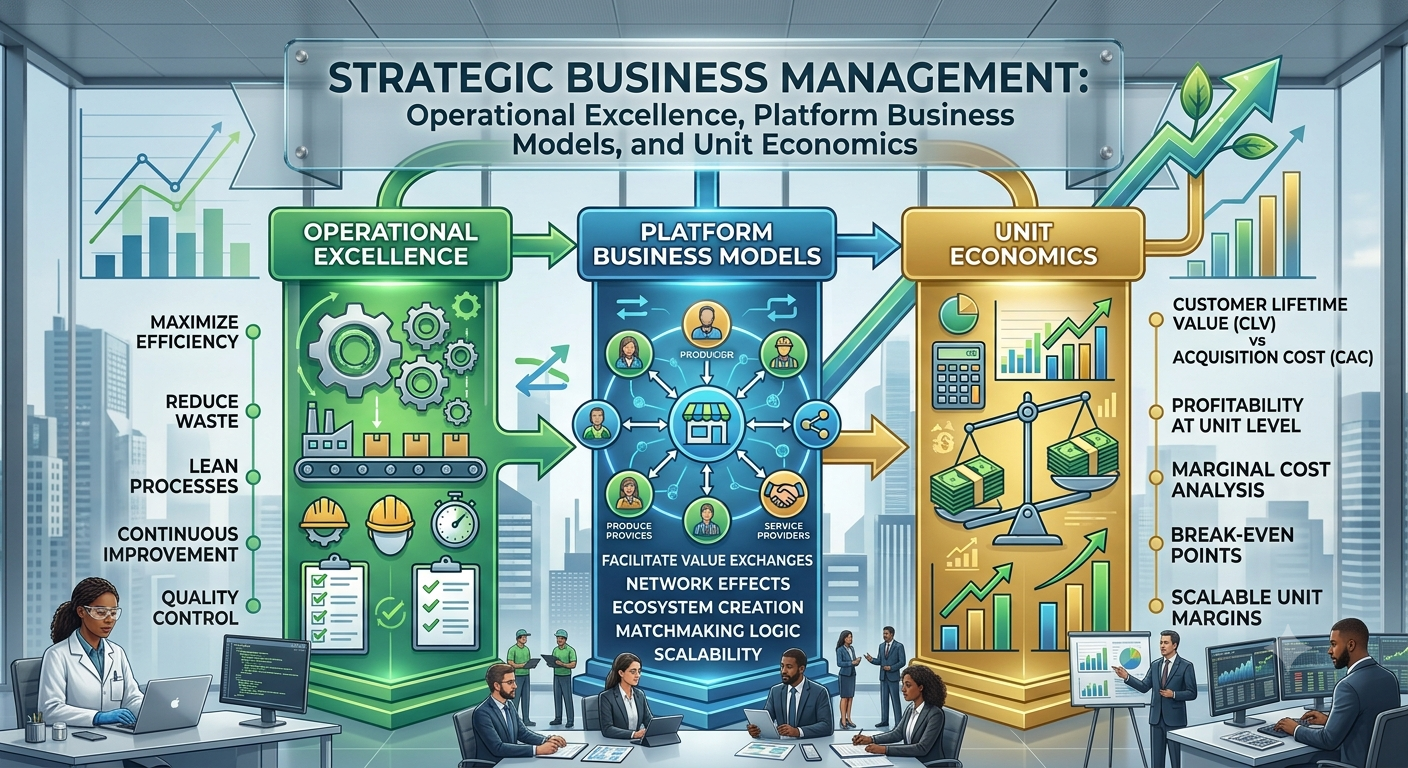
Digital platforms generate enterprise value by orchestrating interactions between external producers and end-consumers rather than maintaining heavy physical assets. Success in platform business models relies on cultivating powerful network effects, where each additional participant increases the utility and overall value of the network for existing users.
Subscription and Software-as-a-Service (SaaS) Models
Subscription frameworks trade single upfront transactions for predictable, recurring revenue streams. Operating a successful subscription business requires balancing Customer Acquisition Costs against the long-term Customer Lifetime Value generated over an average client retention period.
Direct-to-Consumer (D2C) Strategies
By bypassing traditional retail intermediaries, D2C companies maintain direct ownership of consumer relationships, brand presentation, pricing strategy, and first-party customer behavioral data. Modern D2C approaches integrate digital storefronts with selective physical touchpoints to build long-term brand affinity.
2. Mastering Unit Economics and Financial Metrics
A business cannot maintain long-term stability purely through top-line revenue expansion; it must achieve positive unit economics—the foundational profitability of an individual unit of sale or customer interaction.
Customer Acquisition Cost (CAC)
CAC represents the total aggregate expenditure on marketing, advertising, sales salaries, and promotional incentives required to acquire a single new customer within a designated financial period.
Customer Lifetime Value (LTV)
LTV measures the net gross margin profit generated by an average customer over their entire commercial engagement with the company.
The LTV to CAC Ratio
The ratio of Customer Lifetime Value to Customer Acquisition Cost serves as a critical indicator of growth sustainability. A ratio of three-to-one or higher generally indicates healthy commercial efficiency, demonstrating that acquired customers generate sufficient margin to justify marketing investments.
Customer Payback Period
The payback period measures the time required for a new customer to generate sufficient gross margin to fully recover the upfront cost of acquiring them. Scalable business models typically aim for a payback window of under twelve months.
3. Supply Chain Resilience and Process Automation
Global macroeconomic shifts have highlighted the vulnerabilities of traditional, hyper-lean “Just-In-Time” supply chains focused solely on short-term cost minimization. Modern operational strategy balances lean efficiency with structural resilience.
- Diversified Sourcing Networks: Transitioning away from single-source suppliers toward diversified regional vendor networks reduces exposure to shipping bottlenecks and geopolitical trade disruptions.
- Predictive Inventory Analytics: Applying machine learning models to demand forecasting allows businesses to optimize safety stock levels based on real-time consumer trends, seasonal shifts, and supplier delivery schedules.
- Enterprise Process Automation: Implementing automated digital workflows across back-office operations reduces manual handling errors, speeds up vendor onboarding, and accelerates invoice reconciliation cycles.
4. Strategic Frameworks for Sustainable Moats
Maintaining long-term market leadership requires establishing clear competitive moats—defensible structural advantages that prevent competitors from easily capturing market share.
- Network Moats: Built when the intrinsic value of a software platform or marketplace increases automatically as user activity scales.
- Switching Cost Moats: Established when integrating a business solution deeply into a client’s daily operational workflows makes transitioning to a rival provider time-consuming, expensive, or risky.
- Cost Advantage Moats: Achieved when superior production volume, proprietary processing software, or exclusive supplier access allows an enterprise to operate at structural margins competitors cannot match.
5. Frequently Asked Questions
- What is the primary cause of early-stage enterprise failure during scaling phases?Premature scaling—allocating substantial capital toward aggressive marketing and user acquisition before achieving verified product-market fit—is a major cause of early business failure. Expanding operations before customer retention rates stabilize often results in unsustainable cash burn.
- How do enterprises balance immediate operational profitability with long-term innovation?Organizations balance short-term stability with long-term growth using structured portfolio management strategies. Core operations focus on generating consistent short-term profitability, adjacent initiatives scale emerging business lines, and dedicated research efforts explore disruptive long-term opportunities.
- Why is Net Revenue Retention (NRR) a critical metric for subscription businesses?Net Revenue Retention measures the percentage of recurring revenue retained from existing customers over a given timeframe, accounting for expansion upgrades, downgrades, and cancellations. An NRR above one hundred percent indicates that existing customer accounts are expanding, enabling organic revenue growth even before adding new accounts.